
The Injection Molding Process: Steps and Parameters
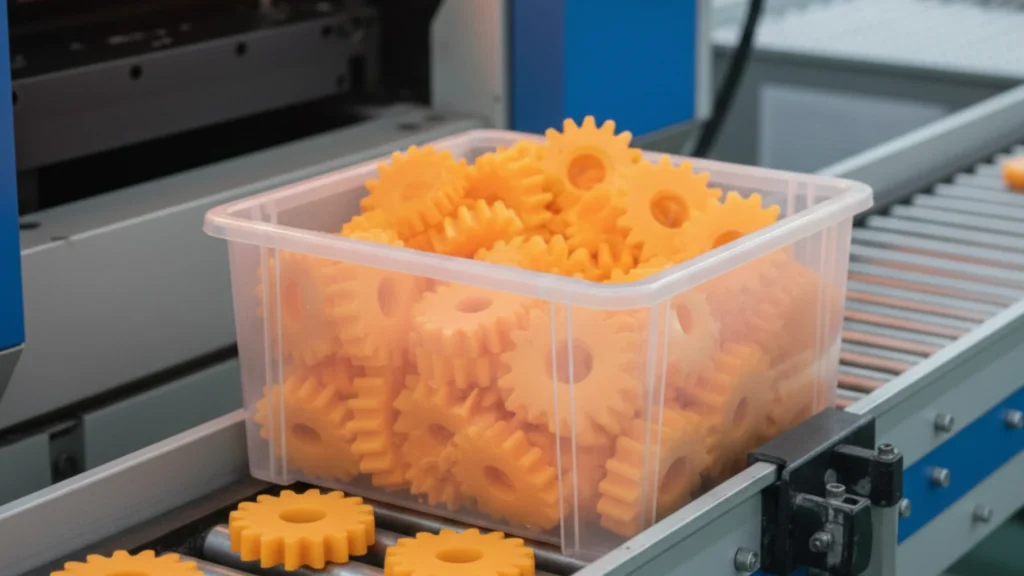
ABS (acrylonitrile-butadiene-styrene) injection molding is a quick, repetitive method of transforming ABS resin pellets into strong, dimensionally stable components. Our combined proven process and intelligent DFM (Design for Manufacture) methods enable the production of high-volume parts with clean surfaces, tight tolerances, and consistent performance, all without unjustifiable expense.
What does ABS Injection Molding mean?
In basic terms, we place some ABS pellets into the mold, then we inject the molten material into the mold, press it into shape, allow it to cool, and eject a finished part. We then repeat this process. ABS is a powerful, lightweight thermoplastic that is simple to colour, paint, or even electroplate. It is chemically and heat-resistant, recyclable, and suited to complex shapes. The trade-offs? It requires controlled temperatures (to prevent thermal degradation), innovative cooling (to prevent warpage) and gating/packing (to reduce sink marks). It is at this point that process control and tooling expertise come in.
Where ABS is an Excellent Choice (Industry Applications)
- Automotive: ABS helps carmakers build lighter, tougher interior parts that look clean and last longer trims, bezels, clips, and brackets that resist impact and keep tight tolerances. It also molds reliably for high volumes, so quality stays consistent throughout production. Examples tooling/services with Proton (Malaysia) for interior components and VinFast (Vietnam) for door/console parts
- Consumer & Appliances: ABS delivers smooth, scuff-resistant surfaces that take colour and paint well, perfect for appliance bodies, control panels, and durable everyday casings. It balances strength with light weight, so products feel solid without being bulky. Example,Honeywell for vacuum cleaner housings and food-prep appliance casings.
- Electronics & Electrical: ABS provides insulation, dimensional stability, and neat, printable surfaces—ideal for enclosures, connectors, and sensor housings that must fit precisely and protect sensitive parts.
- Construction & Tools: ABS offers impact resistance and ergonomic design frenclosures, as well as eedom for power-tool housings and site hardware. It molds complex shapes (such as ribs, grips, and vents) while maintaining consistency across long runs.
The Process Of ABS
- DFM & Tooling: We examine wall thickness, ribs (maintaining ribs at approximately half the wall thickness where needed), and the position of gates, draft, and the risks associated with knit lines to optimise flow and part strength.
- Material Preparation: Drying with controlled and recorded melt-temperature windows ensures stable viscosity, which is crucial for producing thin-wall components.
- Precision Molding: Repeatability at volume – Balanced runners, tuned packing/hold pressure, and optimised cycle time.
- Cooling Strategy: Cycle-time control and evenly spaced channels reduce the difference in shrinkage and warpage.
- Finishing/Assembly: Pad printing/painting and assembly where necessary. Finishing/Production: Light machining, insert molding, overmolding (e.g., soft-grip handles). Finishing/Assembly: Pad printing/painting.
- Quality Assurance: Dimensional tests, cosmetic tests, gate vestige test, and mechanical test to your spec.
Common ABS Defects and How to Prevent Them.
- Thermal Degradation: A small melt window and residence-time control ensure that ABS remains below destructive levels.
- Warpage: The wall design is uniform, the filling is balanced, and the layout of cooling channels is robust, ensuring dimensional stability.
- Sink Marks: Optimal rib-to-wall ratios, gate positioning, and optimised packing/hold ensure clean surfaces.
- Flow-Related Problems: Gate sizing and shear control ensure the protection of cosmetics and weld-line strength.
Conclusion
ABS injection molding is a fast, consistent way to make tough, high-quality parts at scale. With DFM-first design, precise material control, balanced filling/packing, and robust cooling, you can avoid common defects (such as warpage and sink) and meet cosmetic and dimensional targets—even for thin-wall, thick-section, or multi-material builds. Pair that with flexible finishing (color-through, paint, electroplating) and assembly options, and you’ve got production-ready components for automotive, consumer, electronics, and tool-grade applications.
Ready to move from concept to consistent series production? Share your CAD, target cost, and volumes with Pro-Fine Plastics for rapid DFM feedback, quotations, and a clear path to samples, approvals, and ramp-up. Contact Pro-Fine Plastics today to get your ABS injection molding project started.