
What is the PP & PC injection molding?
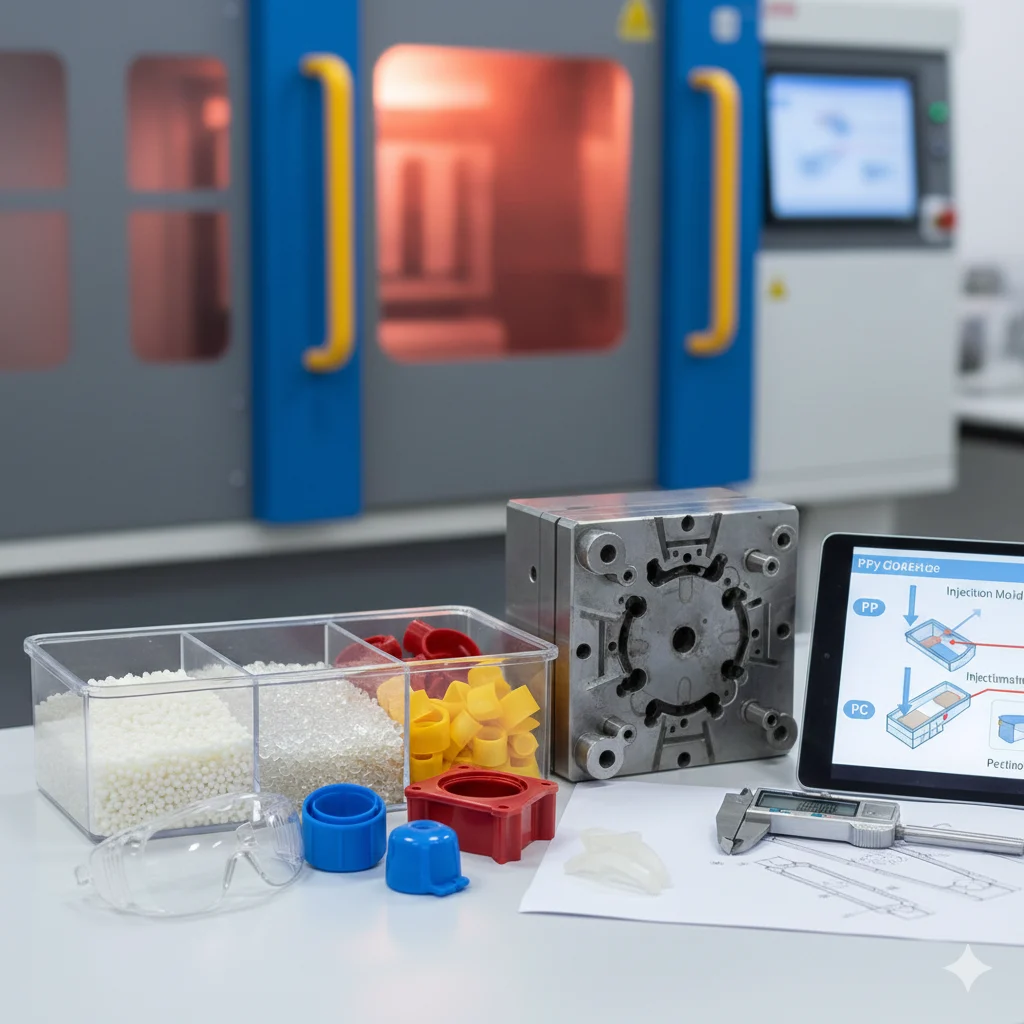
Injection molding processes PP (polypropylene) and PC (polycarbonate) resin pellets, injecting them into a fine steel tool to produce parts in any quantity. PP has chemical resistance and low density as well as living-hinge capability, and PC has high impact strength, heat resistance, and optical clarity. Under good DFM, both materials are utilised to produce clean cosmetics, achieve tight fits, and ensure repeatable and reliable production.
What are the materials used in PP injection and PC injection molding?
- PP (Polypropylene): Homopolymer (stiffer), copolymer (tougher), UV-stabilised, mineral/talc-filled to reduce shrink/warpage, antistatic and FR grades.
- PC (Polycarbonate): Clear/optical, FR (UL94 V-0), with outdoor versions based on UV stabilisation, and glass-filled to create structural components, featuring stress-crack-resistant compounds.
Plastic injection molding in the industry of PP and PC.
- Appliances & HVAC (PP & Polycarbonate)
Polypropylene (PP) and polycarbonate (PC) are common in home and HVAC devices for their durability, chemical resistance, and impact strength. PP is used for pump reservoirs, drip trays, cable grommets, and lightweight internal brackets; PC serves for rugged outer housings, fan guards, and clear inspection windows. Honeywell applies PP for chemically resistant internal parts and PC for impact-safe covers in appliances, while Aspen Pumps Group uses PP in condensate pump bases/reservoirs and PC for protective shrouds and sight windows—delivering long service life with easy molding and clean finishes.
- Electronics/EMS & Power (PP & Polycarbonate)
In electronics manufacturing, PP supports coil formers, carriers, trays, and assembly fixtures thanks to its fatigue strength and chemical resistance; PC is selected for connector shells, sensor enclosures, and device fronts where heat stability and toughness are critical. Tamura Electronics leverages PP for transformer bobbins and PC for protective covers and terminal guards, ensuring electrical reliability. EMS providers like Jabil Circuit integrate PC housings for robust assemblies and PP tooling/fixtures on the line to speed builds while maintaining dimensional accuracy.
Process of it
- DFM inspection: Walls, ribs ([?]40-60 of wall), draft angles, position of gates, knit-line inspection, stack-ups of assembly.
- Tooling construction: Steel grade, type of runner or hot runner, venting, layout of cooling channels, texture/polish (high polish for optical PC).
- Material prep:
- PP: Generally, no drying; regulate melt/mold temperatures in shrink control.
- PC: Vigorous drying (hygroscopic) to avoid splay/bubbles; obey the melt window to prevent degradation.
- Processing: Balanced fill; tune pack/hold to feed shrink; shear control (optical PC in particular).
- Cooling & ejection: Symmetric, near-cavity cooling to restrict the warp; ejection should be gentle to avoid damaging the cosmetic faces/snaps.
- Finishing, QA: Deflash, printing/painting (PP may require surface treatment/primer), assembly; dimensional/cosmetic inspection.
Defects and their prevention.
- Warpage (also known as PP): Even walls, equal flow, mineral/talc fill, and even cooling; tune mold temperature /hold pressure.
- Splay/bubbles (PC): Dry thoroughly; regulate residence time, shear and back pressure.
- Short shots: increase melt/injection speed/pressure, enhance venting, increase the number of gates/runners, and make the PC dry.
- Flash: Clamp up, fine parting line/vents; moderate peak pressure and cushion.
- Weld lines: Relocate gates, elevate melt/mold temperatures, speed up fill rate; film/edge gates.
- Stress cracking (PC): Avoid using harsh cleaners; minimise stress molded-in by employing good pack/cool and generous radii.
- Problems with adhesion (overmold): Select adhesion-compatible TPE, control substrate temperature and develop robust bondlines.
Conclusion
The properties of PP include chemical resistance, lightness, and flexibility; PC is tough, heat-resistant, and transparent. Ready to use the appropriate grade of resin, DFM-controlled tooling, and controlled processes (drying PC, shrink management PP), you will achieve clean finishes, tight tolerances, and reliable assemblies, including industrial guards, consumer casings, auto clips, and clear lenses.
Exploring a new PP or PC program? Send your drawings and targets to Pro-Fine Plastics, and we will suggest the materials to use, the tooling paths to follow, and a realistic build schedule to transition from T0 samples to consistent production.