
What Does Electronic Injection Molding Mean?
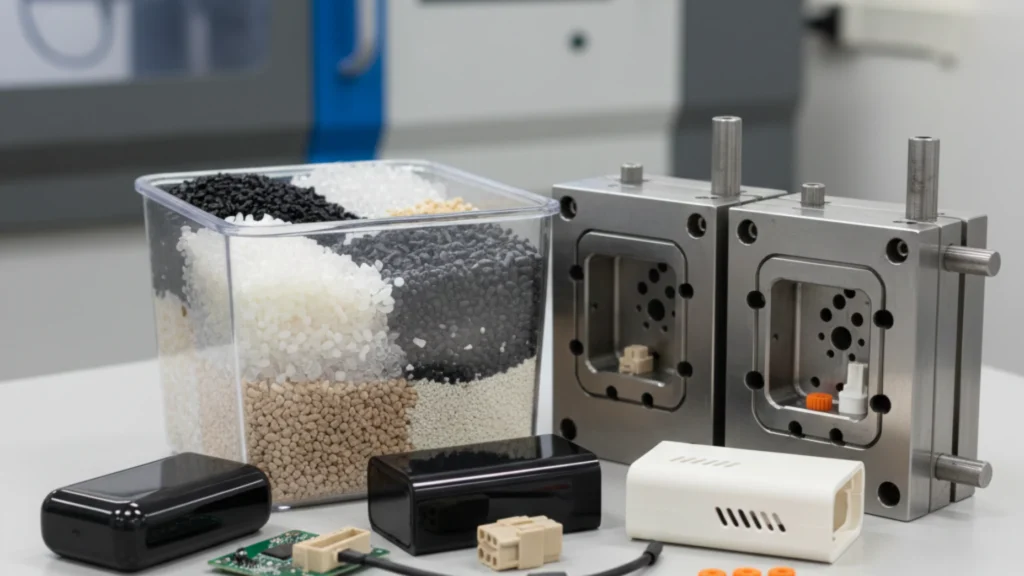
Electronic injection molding is used to form electronic parts (e.g., ABS, PC, PA, PBT) into a fine steel mold after melting in engineering plastics. This high-volume, high-tolerance, high-clean cosmetic, repeatable, rapid cycle produces high-volume components compatible with PCBs, seals, and fasteners.
What is the material used in the injection molding of electronics?
- ABS / FR-ABS (UL94 V-0 options): Good toughness, easy working, painted surfaces of housings and bezels.
- PC (Polycarbonate): High impact/clarity, heat-resistant; ideal for transparent windows and strong covers.
- PC/ABS Blends: Equal toughness, heat and cosmetics–usually in enclosures and dashboards.
- PBT (whole/no GF): good dielectric properties, chemical and heat resistance – perfect to use in connectors and coil bobbins.
- PA6/PA66 (Nylon, commonly GF): Nylon is a strong material that can withstand high temperatures and is widely used in applications such as clips, gears, and structural components.
- PPS / LCP / PEEK (advanced): Since they are high-heat, high-stability, thin-wall precision components in electronic applications that are demanding.
- TPE/TPU (overmold): Soft-pinch grips, gaskets, strain reliefs on hard materials (e.g., overmold on ABS/PC).
- ESD/Conductive Grades: Antistatic/EMI-controlled parts made of carbon- or mineral-filled resin.
- Halogen-free / UV-stabilised / Colour-matched versions: To fulfil environmental, outdoor, or brand needs.
Electronic injection molding used in industries.
- Industrial Electronics:
In the industry, we have molded our plastic into applications for control panels, machine parts, and enclosures. These elements must be positioned to support intensive use while safeguarding delicate electronic systems. Our products will meet this high expectation to ensure reliability and durability in challenging environments. Dwyer Instruments (USA) is a global leader in testing and measurement for various industries, and they utilise our accuracy-molded parts in their instruments, which enable critical monitoring across different sectors.
- Energy Management:
In the case of energy management systems, our plastic injection-molded products are integral to the manufacture of thermostats, temperature controllers, and energy-saving gadgets. These sections ensure maximum energy efficiency and system stability. A manufacturer of thermostat and temperature controllers, Johnson Controls (Canada) uses our components in their products, which plays a role in innovative solutions involving energy management in homes and companies.
Process of Electronic Injection Molding
- DFM inspection: Wall thickness, ribs (approximately 40-60 per cent of wall), draft, gate placement, weld lines, and stack-ups of assembly.
- Tooling construction: Steel, hot/cold runners, cool, venting, texture.
- Preparation of material: Drying and melt-window management to achieve viscosity, strength and colour stability.
- Molding-packing: Balanced fill; tuned pack/hold pressure/time; optimisation of clamp and injection profile.
- Cooling & ejection: Clean cooling to prevent warpage; forced ejection to safeguard surfaces.
- Finishing and Quality: Deflash, printing/painting, assembly, dimensional/cosmetic inspection and testing.
Frequent defects and preventive measures.
- Warpage: Equal walls, even flow, equal cooling; fine-tune mold/melt temperature; selective use of GF.
- Minor adjustments: Increase melt/injection rate/pressure, enhance venting, increase gate and runner size, and dry resin.
- Flash: Improve parting-line fit, vent depths, clamp, and reduce peak pressure.
- Burn marks: Add/clean vents, fill speed is moderate at the fill end, and adjust the gate to prevent gas traps.
- Weld lines: Reposition gates/flow, increase temp melt/mold, increase injection rate; consider film/edge gates.
- Voids/bubbles: Increase boost pack/hold, lower melt temperature, redesign thick areas, and ensure good drying.
- Splay/silvering: Dry well, minimise shear, flow routes; prevent contamination.
- Jetting: Melt temperature is slightly elevated; the interval of free flow before impingement is reduced. Move the gate.
Conclusion
Precision, durability, and repeatability are the keys that determine whether electronic products succeed or fail, and electronic injection molding is the most effective path to achieving all three. Using the correct choice of resin, DFM-first design, and with tight process control, will result in lighter parts that contain delicate electronics, can be assembled, and can transition to pilot and mass production across industrial, energy, consumer, and automotive markets.
Have a drawing or target cost? Send your CAD and requirements to Pro-Fine Plastics and receive quick DFM feedback, an explicit quote, validation, and ramp-up. For a jump start on a project of electronic injection molding, contact Pro-Fine Plastics today!